
Job loss tax deductions you can claim after a layoff in 2025

Losing a job unexpectedly in 2025 creates financial stress that extends well beyond the immediate loss of income. With the 2026 tax filing season underway, understanding the tax deductions and credits available after a layoff can save you thousands of dollars on your return. The One Big Beautiful Bill Act introduced several new tax breaks, making this filing season especially important for anyone who experienced reduced income last year.
Many taxpayers overlook significant savings opportunities simply because they are unaware of the tax rules that apply after a job loss. From managing how unemployment benefits are taxed to making strategic decisions about your Traditional 401k and investment portfolio, each financial move carries important tax consequences that can meaningfully reduce your taxable income.
The good news is that several provisions in the tax code help soften the financial blow of unemployment. A lower income year may qualify you for credits and deductions previously out of reach, and new OBBBA provisions add further relief. This guide walks you through the key tax deductions, credits, and Individuals strategies that can help you file your 2025 tax return with confidence.
How is severance pay taxed after a layoff in 2025
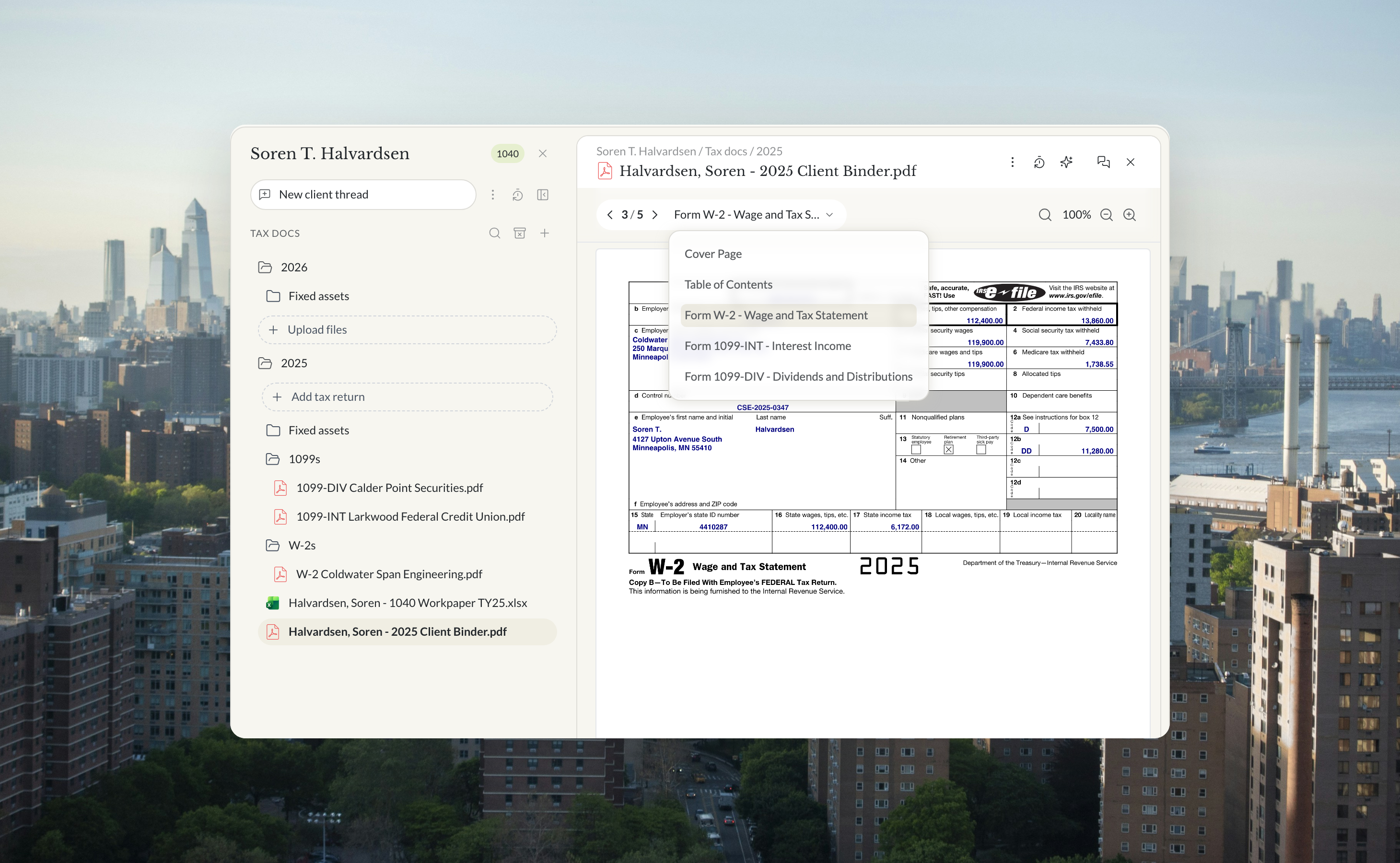
When you receive a severance package from your former employer, the IRS treats that payment as ordinary income subject to federal income tax withholding, Social Security, and Medicare taxes. Your employer will report severance payments on your W-2 form for the year in which the payment is made, and it may push you into a higher tax bracket for that year.
Understanding how severance pay interacts with your total income is essential for accurate tax planning. If you receive a large severance package alongside several months of regular wages, your combined income may be higher than expected, creating an unexpected tax burden at filing time. The 2025 federal tax brackets remain 10%, 12%, 22%, 24%, 32%, 35%, and 37%, and knowing exactly where your income falls can help you plan effectively.
There are several strategies to manage the tax impact of severance pay:
- Negotiate payment timing by requesting that your employer spread severance payments across two tax years if your layoff occurs late in the year, potentially keeping you in a lower bracket for both years
- Maximize retirement contributions by directing a portion of severance into your employer-sponsored retirement plan before your last day if the plan allows it
- Accelerate charitable contributions into 2025 while the full deduction value is available, since beginning in 2026, a new 0.5% AGI floor reduces itemized charitable deductions, and top-bracket benefits are capped at 35%
- Review your withholding to ensure your employer withholds at an appropriate rate rather than the default supplemental wage rate of 22%
According to IRS Publication 525, severance pay is fully taxable in the year it is received, making proactive planning for the timing and allocation of these funds a critical step in your overall tax strategy.
Are unemployment benefits taxable in 2025
Unemployment compensation is fully taxable at the federal level, and many states also tax these benefits. The amount you receive will be reported on Form 1099-G, and you are responsible for reporting it as income on your federal tax return when you file taxes in 2026.
One common mistake taxpayers make is failing to have taxes withheld from unemployment benefits, which can result in a large tax bill at filing time. You can submit Form W-4V to your state unemployment agency to request voluntary federal income tax withholding at a flat 10% rate. While this may not cover your full tax obligation, it helps reduce the surprise at year-end.
If your income drops significantly due to unemployment, your effective tax rate for the year may be lower than in previous years. This creates valuable planning opportunities:
- Converting traditional retirement funds to a Roth 401k or Roth IRA during a low-income year can result in paying less tax on the conversion than you would during full employment
- Recognizing capital gains from investments may be advantageous while your income is temporarily reduced, since long-term capital gains rates depend on your overall taxable income
- Claiming the standard deduction of $15,750 for single filers or $31,500 for married filing jointly in 2025 may provide greater benefit if you previously itemized with employer-related expenses
If you earned overtime pay before your layoff, the new OBBBA overtime deduction allows you to deduct up to $12,500 for individuals or $25,000 for joint filers in overtime premium pay. This tax break applies to the premium portion of overtime wages and can further reduce your taxable income on your 2025 return. Your Health savings account can also play a valuable role during unemployment, allowing you to pay qualifying medical expenses with pre-tax dollars while preserving your cash reserves.
What happens to your 401k when you get laid off
One of the most consequential financial decisions after a job loss involves your employer-sponsored retirement plan. Withdrawing funds early from a 401k or similar account typically triggers a 10% early withdrawal penalty plus ordinary income taxes on the full distribution amount. However, several exceptions and strategies can help you manage these accounts wisely.
If you are 55 or older in the year you leave your employer, you may be eligible for the Rule of 55 exception, which allows penalty-free withdrawals from the 401k plan of the employer you just left. This exception does not apply to funds rolled into an IRA, so the decision about whether to roll over your balance or leave it in the employer plan carries important implications.
Strategic options for your retirement accounts after a layoff include:
- Roll your 401k into an IRA to access broader investment options and maintain tax-deferred growth while avoiding early withdrawal penalties
- Contribute to a Traditional IRA to generate above-the-line deductions that reduce your adjusted gross income, with contribution limits of $7,000 for 2025 or $8,000 if you are 50 or older
- Consider a Roth conversion during the lower-income period, paying tax at a potentially reduced rate while securing tax-free growth for the future
- Avoid early distributions unless necessary, since the combined 10% penalty plus income tax can consume over 30% of the withdrawal amount
IRS Publication 590-A provides detailed guidance on IRA contribution rules, which become especially relevant when you transition from an employer-sponsored plan. Strategic use of your Traditional 401k during this period can significantly affect your long-term wealth.
How tax loss harvesting reduces your bill after a job loss
A period of unemployment creates a unique opportunity to review your investment portfolio for Tax loss harvesting opportunities. This strategy involves selling investments that have declined in value to realize capital losses, which can offset capital gains and up to $3,000 of ordinary income per year.
Tax loss harvesting is particularly valuable during a year when your income fluctuates due to a job loss. With potentially lower overall income, the $3,000 ordinary income deduction from capital losses has a proportionally greater impact on your tax liability. Any losses exceeding the annual limit can be carried forward to future tax years, providing ongoing benefits as your income recovers.
Key considerations for tax loss harvesting after a layoff:
- Review your brokerage accounts for positions with unrealized losses that can be strategically realized before year-end
- Be mindful of the wash sale rule, which disallows a loss deduction if you repurchase a substantially identical security within 30 days before or after the sale
- Coordinate capital loss recognition with any capital gains from severance-related stock sales or equity compensation vesting
- Carry forward unused losses to offset income in future years when you return to full employment at a higher tax bracket
If you received employer stock through equity compensation programs, a layoff may trigger taxable events depending on the type of award and any acceleration provisions in your agreement.
Health insurance and COBRA tax deductions after a layoff
Maintaining health insurance after a layoff is both a practical necessity and a tax planning opportunity. COBRA continuation coverage allows you to remain on your former employer's health plan for up to 18 months, though premiums are higher since you pay the full cost without employer subsidies.
If you purchase individual health insurance through the Health Insurance Marketplace, you may qualify for the premium tax credit based on projected annual income. This credit can substantially reduce monthly premium costs, but you must accurately estimate your income to avoid repayment when you file.
Health-related tax deduction strategies during unemployment include:
- Maximize HSA contributions if you maintain a high-deductible health plan with a minimum deductible of $1,650 for individuals or $3,300 for families in 2025, as contributions reduce your adjusted gross income and fund qualifying medical expenses tax-free
- Deduct health insurance premiums paid out of pocket if you itemize and your total medical expenses exceed 7.5% of your adjusted gross income
- Coordinate the premium tax credit with your actual income projections to receive the correct subsidy amount throughout the year
- Use remaining flexible spending account funds before losing access, as these tax-advantaged dollars cover medical costs without additional tax impact
Your Health savings account balance carries over from year to year and remains available even after you leave your employer, making it a valuable resource during your career transition. The 2025 HSA contribution limit is $4,300 for individual coverage and $8,550 for family coverage.
What tax credits can you claim after losing your job
Several tax credits become more accessible when your income drops during unemployment. Understanding which credits you now qualify for can provide meaningful financial relief during your job search and help you maximize your tax refund when filing in 2026.
The Child & dependent tax credits remain available to qualifying families regardless of employment status. The Child tax credit provides up to $2,200 per qualifying child under age 17 under the One Big Beautiful Bill Act, with a refundable portion of up to $1,700 per child that can generate a tax refund even if your tax liability is zero.
Additional credits and deductions to evaluate after a layoff:
- The earned income tax credit may become available if your earned income falls below eligibility thresholds, with a maximum credit of $8,046 for taxpayers with three or more qualifying children in 2025
- The saver's credit rewards low- and moderate-income taxpayers who contribute to retirement accounts, offering a credit of 10% to 50% of contributions up to $2,000
- Education credits, such as the American Opportunity Tax Credit, can offset costs of up to $2,500 if you pursue training or education during unemployment
- The SALT deduction cap increased to $40,000 for 2025 under the OBBBA, benefiting taxpayers in high-tax states who itemize deductions
If you are considering relocating for a new job and selling your home, the Sell your home exclusion allows you to exclude up to $250,000 in capital gains for single filers or $500,000 for married couples, provided you meet the ownership and use tests. Be sure to review your applicable 2026 State Tax Deadlines so you stay compliant during your transition and file on time.
Maximize your 2025 tax refund after a layoff
A layoff presents challenges, but it also opens the door to tax planning strategies unavailable during years of steady employment. Lower-income years create opportunities for Roth conversions, tax loss harvesting at reduced rates, and access to credits that phase out at higher income levels. With new OBBBA tax deductions now in effect, the 2026 filing season offers more ways to reduce your tax bill and maximize your refund.
Instead's comprehensive tax platform helps you identify every available deduction and credit during life transitions like a job loss, ensuring no savings opportunity goes unclaimed.
Instead's intelligent system analyzes your complete financial picture to recommend personalized strategies that align with your current situation, from retirement account decisions to investment portfolio optimization through tax savings tools.
Navigate your career transition with confidence, knowing that comprehensive tax reporting capabilities keep your finances organized and audit-ready. Explore flexible pricing plans designed to support taxpayers through every stage of their financial journey.
Frequently asked questions
Q: Is severance pay subject to Social Security and Medicare taxes?
A: Yes, severance pay is treated as supplemental wages and is subject to federal income tax withholding, Social Security tax, and Medicare tax. Your employer will report the full amount on your W-2 form for the year in which the payment is made.
Q: Can I deduct job search expenses on my 2025 tax return?
A: Job search expenses such as resume preparation, travel for interviews, and employment agency fees are not deductible as miscellaneous itemized deductions under current tax law. The Tax Cuts and Jobs Act suspended these deductions, and the OBBBA did not reinstate them for the 2025 tax year.
Q: How do I avoid the 10% early withdrawal penalty on my 401k after a layoff?
A: If you are 55 or older in the year you separate from your employer, you can take penalty-free distributions from that employer's 401k plan under the Rule of 55. Alternatively, rolling the funds into an IRA and taking substantially equal periodic payments under IRS Rule 72(t) avoids the penalty at any age.
Q: Should I have taxes withheld from my unemployment benefits?
A: Voluntary withholding at a flat 10% rate can help prevent a large tax bill at filing time. Submit Form W-4V to your state unemployment agency to request withholding. However, 10% may not cover your full obligation depending on your total income for the year.
Q: Can I contribute to an IRA if I am unemployed?
A: You can contribute to an IRA for the tax year as long as you have earned income during that year, such as wages from earlier employment or severance pay. The contribution limit for 2025 is $7,000, or $8,000 if you are 50 or older, and contributions cannot exceed your earned income.
Q: What new tax deductions are available for the 2025 tax year filed in 2026?
A: The OBBBA introduced new deductions, including up to $12,500 for overtime premium pay, up to $25,000 for qualified tips, up to $10,000 for auto loan interest, and an increased SALT cap of $40,000. These can further reduce taxable income for taxpayers who experienced a layoff mid-year.
Q: Does losing my job affect my eligibility for the Child tax credit?
A: The Child tax credit is available regardless of employment status if you meet the income and qualifying child requirements. A reduction in income may increase your credit amount or make the refundable portion of up to $1,700 more beneficial.

Year-End Tax Planning 2026: Checklist of Strategies by Dec 31

How AI Tax Orchestration Works in Instead

.png)



.png)