
How to adjust quarterly tax payments mid-year 2026

Income rarely follows the neat projections made at the beginning of the tax year. Business owners land unexpected contracts, freelancers lose major clients, investors realize substantial capital gains, and employees receive bonuses or face layoffs—all creating significant misalignment between projected and actual tax liability that demands mid-year quarterly payment adjustments.
Taxpayers who rigidly adhere to initial quarterly payment calculations despite dramatic income changes face two equally problematic outcomes. Underpaying quarterly taxes when income increases triggers underpayment penalties and interest charges that can reach thousands of dollars. Overpaying when income decreases unnecessarily ties up cash in the tax system for months, until the refund is processed after annual return filing.
Strategic mid-year adjustment of quarterly tax payments optimizes cash flow while maintaining IRS compliance. Understanding the annualized income method, safe-harbor protections, and calculation techniques transforms reactive tax payments into a proactive financial management tool.
Traditional 401k individual contributions can be adjusted mid-year to reduce quarterly payment requirements, while Health savings account deposits provide flexibility for reducing tax liability throughout the year.
Recognizing when quarterly payment adjustments are needed
Several income and deduction scenarios require mid-year quarterly payment adjustments to maintain optimal tax positioning.
Income increase scenarios requiring upward adjustments:
- Business revenue surge: Landing major contracts, launching successful products, or experiencing seasonal peaks substantially exceeding initial projections
- Investment gains: Realizing significant capital gains from stock sales, cryptocurrency disposals, or property transactions
- Employment changes: Receiving substantial bonuses, commissions, or raises not reflected in original income projections
- Side income growth: Gig economy work, freelance projects, or consulting engagements generating more income than anticipated
- Rental property success: Higher occupancy rates, rent increases, or additional property acquisitions
Income decrease scenarios allowing downward adjustments:
- Business slowdown: Lost clients, canceled contracts, or industry downturns, reducing expected revenue
- Investment losses: Capital losses offsetting projected gains or declining dividend income
- Employment changes: Job loss, reduced hours, or transition to a lower-paying position
- Expense increases: Larger deductible expenses than initially projected, reducing net taxable income
- Retirement plan contributions: Mid-year decisions to maximize Traditional 401k individual or SEP-IRA contributions
The general rule is simple—if your projected annual tax liability changes by more than 10% from your original estimate, a mid-year quarterly payment adjustment should be seriously considered.
The annualized income method is explained
The annualized income method allows quarterly payment amounts to vary based on actual income received during each period rather than dividing estimated annual amounts equally. This IRS-approved approach prevents penalties when income fluctuates significantly throughout the year. For detailed guidance, refer to IRS Publication 505, Tax Withholding and Estimated Tax.
How the annualized income calculation works:
The traditional method assumes equal income distribution—$100,000 annual income equals $25,000 per quarter, requiring equal $2,500 quarterly tax payments. The annualized income method instead calculates actual income through each quarter, annualizes it, calculates tax on that amount, and determines the payment required for that specific quarter.
Annualized income calculation example:
Traditional approach (Equal payments):
- Projected annual income: $120,000
- Equal quarterly income: $30,000
- Equal quarterly tax payment: $6,000
Annualized income approach (Actual income):
- Q1 actual income: $15,000 → Annualized: $60,000 → Q1 payment: $2,000
- Q2 actual income: $20,000 → Annualized: $70,000 → Q2 payment: $2,500
- Q3 actual income: $40,000 → Annualized: $105,000 → Q3 payment: $5,500
- Q4 actual income: $45,000 → Annualized: $120,000 → Q4 payment: $6,000
The annualized method requires Form 2210 Schedule AI attached to your annual return, demonstrating the calculation methodology and proving appropriate payments for each period based on actual income timing.
Tax loss harvesting executed mid-year can reduce subsequent quarterly payment requirements, while S Corporation owners can adjust reasonable compensation, affecting both W-2 withholding and quarterly payment requirements.
Step-by-step mid-year adjustment process
Adjusting quarterly payments mid-year requires systematic evaluation of your current tax position and recalculation of remaining payment obligations.
Step 1: Calculate Year-to-Date Income and Deductions
Review actual income and expenses through the current date. Include all sources—W-2 wages, self-employment income, investment earnings, rental income, and other taxable receipts. Subtract actual deductions, including business expenses, retirement contributions, and Health savings account deposits.
Step 2: Project Remaining Year Income
Estimate income and deductions for the remainder of the year based on current trends, known upcoming transactions, and realistic projections. Be conservative—underestimating creates underpayment risk while overestimating merely accelerates cash outflow.
Step 3: Calculate Updated Annual Tax Liability
Combine year-to-date actual results with projected remaining year figures. Apply current tax rates, calculate self-employment tax if applicable, and subtract expected credits. This produces your updated annual tax liability estimate.
Step 4: Determine Required Remaining Payments
Subtract quarterly payments already made from your updated annual tax liability. Divide the remaining amount by the number of quarters left in the year to determine adjusted quarterly payment amounts.
Adjustment calculation example:
Original situation (January 2026):
- Projected annual income: $100,000
- Projected tax liability: $18,000
- Q1 & Q2 payments made: $4,500 each ($9,000 total)
Mid-year reality (July 2026):
- Actual H1 2026 income: $70,000 (higher than projected $50,000)
- Projected H2 2026 income: $50,000
- Updated annual income: $120,000
- Updated tax liability: $24,000
- Payments already made: $9,000
- Remaining liability: $15,000
- Q3 & Q4 adjusted payments: $7,500 each
Home office deductions implemented mid-year reduce remaining quarterly payment requirements, while Meals deductions provide additional opportunities for reduction.
Safe harbor protections when adjusting payments
Understanding safe-harbor rules provides flexibility for mid-year adjustments while guaranteeing penalty protection regardless of the final tax liability.
Three safe harbor options:
Option 1: Prior Year Safe Harbor (Most Conservative)Pay 100% of your 2025 total tax liability through 2026 quarterly payments (110% if 2025 AGI exceeded $150,000). This approach works even when making no mid-year adjustments—simply continue original payment amounts regardless of income changes.
Option 2: Current Year 90% Rule (Requires Accuracy)Pay at least 90% of your actual 2026 total tax through withholding and estimated payments. Mid-year adjustments must accurately project final liability to ensure the 90% threshold is met.
Option 3: Annualized Income Method (Maximum Flexibility)Use Form 2210 Schedule AI showing payments matched actual income timing for each quarter. Provides protection when income varies dramatically throughout the year.
Strategic safe harbor application:
If your 2025 tax was $30,000, paying $7,500 quarterly in 2026 guarantees penalty protection, even if 2026 income surges and generates a $50,000 total tax liability. You'll owe the additional $20,000 at filing but face no underpayment penalties.
Conversely, if 2026 income drops, generating only $20,000 total tax, the $10,000 overpayment becomes a refund when filing your return.
Making mid-year payment adjustments official
Once you've calculated adjusted quarterly payment amounts, implementing the changes requires selecting appropriate payment methods and maintaining proper documentation.
Payment adjustment implementation:
For upcoming quarters: Simply pay the newly calculated amount on the next quarterly deadline using your preferred payment method. No advance notification to the IRS is required—the adjustment is reflected through the actual payment amount submitted.
For past quarters: If you've already missed paying sufficient amounts for completed quarters, make catch-up payments immediately to minimize penalty accumulation. Include the additional amount with your next quarterly payment or submit a separate payment, noting which prior quarter it applies to.
Payment method options:
- IRS Direct Pay: Free electronic payment with immediate confirmation, ideal for adjusted amounts
- EFTPS: Government portal allowing payment scheduling with updated amounts
- Credit/Debit Card: Useful when earning rewards offsets convenience fees
- Form 1040-ES: Paper voucher with check indicating payment quarter and adjusted amount
Documentation requirements:
Maintain comprehensive records supporting your mid-year adjustment calculations, including income statements through the adjustment date, expense records, projection assumptions for the remaining year, and payment confirmations for all quarterly amounts.
Vehicle expenses tracked mid-year can justify reduced payments, while Travel expenses properly documented support adjustment calculations.
Common mid-year adjustment scenarios
Real-world situations demonstrate when and how to adjust quarterly payments to optimize understanding of practical application.
Scenario 1: Unexpected Business Success
Initial projection: Self-employed consultant projected an annual income of $80,000, requiring $2,500 quarterly payments.
Mid-year reality: Landed a major client in Q2, generating an additional $60,000 revenue—updated annual income projection: $140,000.
Adjustment: Recalculate total tax liability on $140,000 ($28,000). Subtract Q1-Q2 payments made ($5,000). Divide remaining liability by 2 quarters ($11,500 each for Q3-Q4).
Scenario 2: Investment Loss Harvesting
Initial projection: The investor projected $50,000 in capital gains, requiring $5,000 in quarterly payments.
Mid-year reality: Implemented Tax loss harvesting in Q3, realizing $30,000 losses offsetting gains. Net capital gains: $20,000.
Adjustment: Recalculate tax on reduced gains ($4,000 total tax). Subtract payments made ($7,500). Result: $3,500 overpayment is refunded at filing. Reduce/eliminate Q4 payment.
Scenario 3: Job Loss and Business Start
Initial projection: Employee with a $100,000 salary plus $20,000 side business income.
Mid-year reality: Lost job in Q2, started full-time business. Projected annual income drops to $60,000.
Adjustment: Recalculate tax on $60,000 ($9,000 total). Subtract payments made ($6,000). Remaining liability: $3,000 for Q3-Q4 ($1,500 each).
Technology tools for adjustment calculations
Modern tax software and platforms simplify mid-year adjustment calculations and payment management.
Instead's platform advantages:
Instead's comprehensive tax platform automates mid-year adjustment calculations by continuously tracking income and expense changes, projecting updated annual tax liability in real-time, calculating adjusted quarterly payment requirements, and providing payment deadline reminders with updated amounts.
The intelligent system analyzes your actual financial performance against original projections, identifies the optimal timing for adjustments, and recommends specific payment amounts that maximize cash flow while maintaining compliance.
Key platform features:
- Real-time income and expense tracking, integrating with accounting systems
- Automated quarterly payment calculations reflecting current year projections
- Safe harbor analysis showing which method provides the best protection
- Payment history tracking with deadline management
- Form 2210 Schedule AI preparation support for the annualized income method
Tax savings opportunities identified mid-year enable strategic payment adjustments, supported by tax reporting capabilities providing adjustment documentation.
Year-end reconciliation considerations
As the tax year concludes, final adjustments ensure accuracy and optimize your overall tax position.
Fourth quarter special rules:
The January 15, 2027, fourth quarter payment can be skipped by filing your complete 2026 return and paying all taxes owed by February 2, 2027. This option works well when mid-year adjustments leave uncertainty about final liability—simply calculate exact amounts when preparing your return rather than estimating for Q4.
Final adjustment considerations:
- Review actual annual results: Compare final income and deductions against mid-year projections
- Calculate precise remaining liability: Use exact figures rather than estimates
- Implement final strategies: Make retirement contributions, execute tax loss harvesting, and time deductible expenses
- Determine optimal filing approach: Evaluate whether early filing eliminates the Q4 payment need
Hiring kids strategies implemented before year-end can reduce final quarterly payment requirements while providing family tax benefits.
Transform quarterly payment management with intelligent automation
Mid-year quarterly payment adjustments require continuous monitoring of income changes, complex calculations, and timely payment submissions throughout the year. Manual management creates an administrative burden and increases the risk of errors, potentially triggering penalties.
Instead's comprehensive tax platform eliminates adjustment complexity through intelligent automation, continuously monitoring your tax position and recommending optimal payment adjustments.
Instead's intelligent system tracks income and expense changes in real time, automatically calculates adjusted quarterly payment requirements, provides deadline reminders with updated amounts, and maintains comprehensive documentation supporting all adjustments for audit defense.
Explore our flexible pricing plans that provide comprehensive year-round tax planning support and intelligent quarterly payment management.
Frequently asked questions
Q: How often should I review and adjust my quarterly tax payments during 2026?
A: Review quarterly payments whenever income or deductions change by more than 10% from original projections. At a minimum, conduct formal reviews after each quarter, once actual results are precise. Significant events such as major contract wins, job changes, or significant investment transactions should trigger an immediate adjustment evaluation regardless of timing.
Q: Will the IRS penalize me for making mid-year quarterly payment adjustments?
A: No, the IRS expects and encourages taxpayers to adjust quarterly payments when circumstances change. Adjustments are perfectly legal and appropriate. The key is ensuring that your total payments throughout the year meet safe-harbor requirements or closely match your actual tax liability to avoid underpayment penalties.
Q: Can I skip a quarterly payment altogether if I overpaid in earlier quarters?
A: Yes, if overpayments from earlier quarters exceed remaining tax liability, you can skip subsequent payments without penalty. However, maintain careful documentation showing your calculations and why skipping payments was appropriate. The IRS calculates penalties based on cumulative payments throughout the year, not individual quarterly amounts.
Q: What happens if my mid-year adjustment calculations prove inaccurate?
A: If final tax liability differs from mid-year projections, you'll either owe additional tax or receive a refund when filing your return. Meeting safe-harbor requirements (100/110% of the prior year or 90% of the current year) protects against penalties, even when projections prove inaccurate. The annualized income method, as provided in Form 2210 Schedule AI, provides additional protection when income timing creates projection difficulties.
Q: Should I adjust quarterly payments based on stock market volatility?
A: Adjust payments based on actual realized gains or losses, not unrealized market fluctuations. If you sell investments that generate capital gains mid-year, increase the subsequent quarterly payments. If you implement tax-loss harvesting to realize losses, reduce remaining payments accordingly. Unrealized gains and losses don't affect current-year tax liability until positions are sold.
Q: Can I increase W-2 withholding instead of making mid-year quarterly payment adjustments?
A: Yes, employees with W-2 income can increase withholding to cover additional tax liability rather than making quarterly payments. This works particularly well mid-year because the IRS treats withholding as paid evenly throughout the year, regardless of actual timing, potentially avoiding underpayment penalties even with late-year withholding increases. File a new Form W-4 with your employer to request higher withholding amounts.
Q: How do I document mid-year quarterly payment adjustments for IRS compliance?
A: Maintain records showing income and expenses through the adjustment date, projection assumptions for the remaining year, calculation methodology determining adjusted payment amounts, and payment confirmations for all quarterly amounts. If using the annualized income method, prepare Form 2210 Schedule AI with your return, demonstrating that payments matched income timing for each quarter. These records support your adjustment decisions if the IRS questions your quarterly payment history.

Year-End Tax Planning 2026: Checklist of Strategies by Dec 31
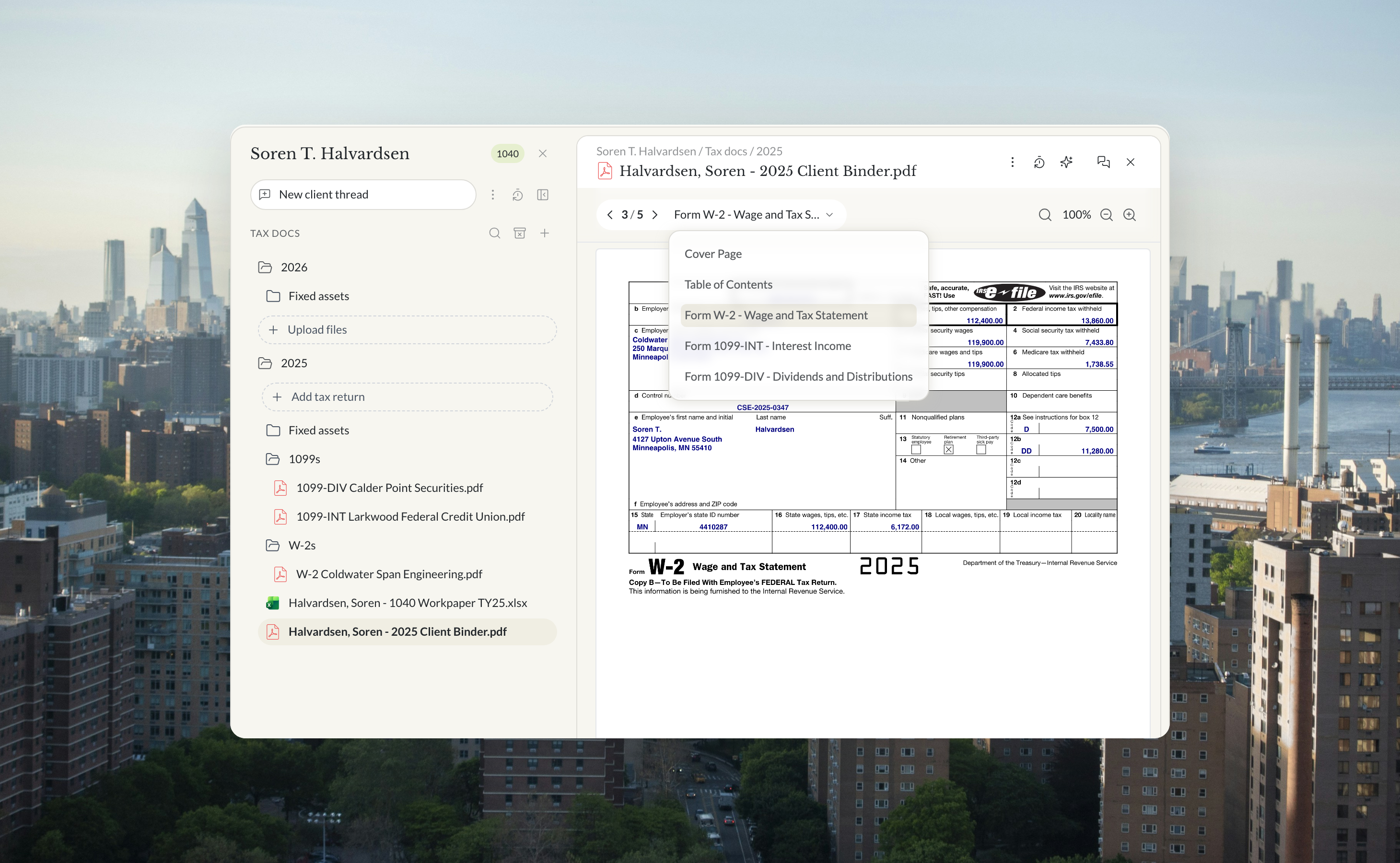

How AI Tax Orchestration Works in Instead

.png)



.png)