
College student tax filing guide 2026 claim your refund

Navigating tax filing as a college student in 2026 presents unique opportunities and challenges that many young adults encounter for the first time. Whether working part-time jobs, receiving scholarship funds, or managing student loans, understanding your tax obligations and potential refunds can result in significant financial benefits during your college years.
The 2026 tax filing season brings important considerations for students, including education tax credits worth up to $2,500, potential refunds from withheld wages, and specific filing requirements based on income levels and dependency status. Many students overlook valuable tax benefits simply because they assume their income is too low to require filing or they lack awareness of available credits.
This comprehensive guide provides detailed information to help college students understand when filing is required, how to claim valuable education credits, and strategies to maximize potential refunds. Understanding these fundamentals establishes good financial habits that extend far beyond your college years and can provide immediate cash benefits during a financially challenging time.
When college students must file taxes in 2026
College students must file federal tax returns when their income exceeds specific thresholds that vary by filing status and dependency status. For 2025 tax returns filed in 2026, single dependents under age 65 must file if their unearned income exceeded $1,300, earned income exceeded $14,600, or gross income exceeded the larger of $1,300 or earned income up to $14,250 plus $450.
Students claimed as dependents on their parents' tax returns face different filing requirements than independent students. Even when filing is not required, students should consider filing if they have had federal income tax withheld from paychecks, making them eligible for refunds of those withheld amounts.
The determination of dependency status significantly impacts both the student's and parents' tax situations. Parents may claim the Child & dependent tax credits for qualifying students, while independent students may claim education credits on their own returns. Individuals navigating these decisions for the first time benefit from understanding all available options before filing.
Key factors determining 2026 filing requirements include:
- Total income from all sources, including wages, tips, and investment income
- Dependency status as claimed on parents' tax return
- Types of income received, such as scholarships, grants, and work-study earnings
- State residency and potential state filing obligations
- Self-employment income from gig work or freelance activities
Students attending school in states different from their permanent residence may face filing requirements in multiple jurisdictions. Understanding 2026 state tax deadlines helps ensure compliance with both federal and state obligations.
Essential tax documents every student needs
College students typically encounter several specific tax forms that document income, education expenses, and tax withholding. Form W-2 reports wages earned from employment, showing total compensation and amounts withheld for federal, state, and Social Security taxes.
Form 1098-T provides critical information about qualified tuition and related expenses paid during the tax year, which is used to determine eligibility for education tax credits. Educational institutions send this form to students who paid qualifying expenses, typically by January 31 of the year following the tax year.
Students with investment income or gig economy work may receive Form 1099-INT for interest income or Form 1099-NEC for nonemployee compensation, requiring Tax loss harvesting considerations for investment income.
Required documentation for 2026 student tax filing:
- All W-2 forms from employers showing wages and withholding amounts
- Form 1098-T from educational institutions documenting tuition payments
- Form 1098-E if student loan interest payments were made during 2025
- Social Security numbers or taxpayer identification numbers for all individuals listed
- Records of scholarships, grants, and fellowship payments received throughout the year
How to maximize the American Opportunity Tax Credit
The American Opportunity Tax Credit provides up to $2,500 per eligible student for qualified education expenses during the first four years of undergraduate education. This credit equals 100% of the first $2,000 in qualified expenses plus 25% of the next $2,000, making it the most valuable education benefit for most students filing in 2026. IRS Publication 970 provides complete guidance on education tax benefits and credit calculation rules.
Qualified expenses for the AOTC include tuition, required fees, and course materials such as textbooks, supplies, and equipment needed for enrollment or attendance. Room and board, insurance, transportation, and personal expenses do not qualify for the credit calculation, though these costs may qualify for Health savings account medical expense deductions.
The Lifetime Learning Credit offers up to $2,000 per tax return for qualified tuition and related expenses for undergraduate, graduate, and professional degree courses. This credit equals 20% of the first $10,000 in qualified expenses and has no limit on the number of years it can be claimed.
Students and families must choose between claiming the AOTC or the Lifetime Learning Credit for the same student in the same tax year. The AOTC generally provides greater benefits for undergraduate students in their first four years, while the Lifetime Learning Credit benefits graduate students or those pursuing continuing education.
Education credit comparison considerations:
- AOTC has a maximum benefit of $2,500 versus the Lifetime Learning Credit maximum of $2,000 annually
- AOTC requires at least half-time enrollment in a degree program for credit eligibility
- The Lifetime Learning Credit has no enrollment status requirement for qualifying students
- AOTC includes a refundable portion up to $1,000 for eligible taxpayers with lower incomes
- Income phase-out ranges differ between the two credits, affecting higher-earning students
Understanding the dependency status tax impact
Dependency status is one of the most consequential factors in student tax planning, affecting both the student's and the student's parents' tax situations. The IRS defines a qualifying child based on relationship, age, residency, support, and joint return tests, all of which must be satisfied to claim dependency. IRS Publication 501 covers these rules in full detail.
Students under age 24 who are full-time students for at least five months during the year and do not provide more than half their own support generally qualify as dependents on their parents' tax returns. This classification prevents students from claiming personal exemptions but allows parents to claim education credits and dependency exemptions.
Independent students who provide more than half their own support can claim personal exemptions and education credits on their own returns. This status typically results when students work full-time, receive substantial non-parental financial support, or meet specific circumstances such as being married, having dependents of their own, or being veterans.
The strategic choice between dependent and independent status depends on comparing total tax benefits available to the family unit. Sometimes the education credits claimed by parents provide greater value than credits the student could claim independently, even considering the lost personal exemption and Traditional 401k contribution opportunities.
Factors affecting dependency determination:
- Total support provided by parents versus support provided by the student from all sources
- Value of room, board, education expenses, and other support elements throughout the year
- Scholarships and grants that reduce the support test calculation for dependency purposes
- Impact on parents' eligibility for education credits and other tax benefits available
- State tax implications that may differ from the federal treatment of dependency status
Parents of dependent students should coordinate their tax planning to ensure that only one party claims education benefits for the same expenses. The Child traditional IRA strategy helps families build retirement savings for students with earned income while potentially reducing current tax liability.
Tax treatment of scholarships and financial aid
Scholarships used for qualified education expenses, including tuition, fees, books, and required supplies, are tax-free for degree candidates. Scholarship amounts used for room, board, or travel are taxable income that must be reported on 2026 tax returns.
Work-study earnings constitute taxable wages subject to federal income tax withholding but are exempt from Social Security and Medicare taxes. Student loan proceeds are not taxable income, but interest paid may be deductible up to $2,500 annually.
Financial aid tax treatment guidelines for 2026:
- Tax-free scholarships must be used for tuition, required fees, books, and course supplies
- Athletic scholarships receive the same treatment as academic scholarships
- Employer-provided tuition assistance up to $5,250 annually is tax-free
- Fellowship and stipend payments for teaching or research are taxable income
- Pell Grants used for qualified expenses are tax-free
Navigating state tax requirements for students
College students frequently face state tax filing requirements in multiple jurisdictions when their school location differs from their permanent residence. Most states consider students to maintain residency in their home state unless they take specific actions to establish residency in another state.
Students working in states other than their school or home state may owe taxes to the state where they earn income. Many states provide credits for taxes paid to other states, preventing complete double taxation.
State tax planning considerations include:
- Domicile rules that determine primary state residency
- Source income rules for wages earned in different states
- Reciprocity agreements between neighboring states
- State-specific education benefits and credits
- Filing requirements for part-year residents
Students attending school in 2026 New York State Tax Deadlines, 2026 Texas State Tax Deadlines, or 2026 Florida State Tax Deadlines should review specific state requirements.
Common mistakes students must avoid when filing
College students frequently make preventable tax filing errors that result in delayed refunds, missed credits, or incorrect tax liability calculations. The most common mistake involves failing to file when tax refunds are available due to withholding from part-time jobs, leaving money unclaimed with the IRS.
Incorrectly calculating or claiming education credits represents another frequent error, particularly when parents and students both claim benefits for the same expenses. The IRS requires coordination between related returns to prevent duplicate claiming of education benefits, which reduces overall tax liability for all parties.
Students sometimes fail to report all income sources, particularly cash tips, gig economy earnings, or scholarship amounts used for non-qualified expenses. Unreported income creates potential audit risks and penalties when the IRS receives information returns showing income that does not appear on the student's tax return.
Dependency status mistakes occur when students and parents disagree about who can claim the student as a dependent, or when students incorrectly claim independent status. At the same time, their parents also claim them as a dependent. These conflicts trigger IRS notices that must be resolved before refunds are processed.
Critical tax filing mistakes to avoid in 2026:
- Forgetting to sign and date tax returns before submission to the IRS
- Using incorrect Social Security numbers or taxpayer identification numbers on forms
- Claiming education credits without proper Form 1098-T documentation from institutions
- Filing before receiving all necessary tax forms from employers and educational institutions
- Overlooking the student loan interest deduction for qualifying interest payments made
Best methods and deadlines for filing in 2026
College students can choose between paper returns, tax preparation software, free-file programs, and professional services. The IRS Free File program provides free online tax preparation for taxpayers with adjusted gross income below specified thresholds.
The federal tax filing deadline for 2025 returns is April 15, 2026, with automatic extensions available until October 15, 2026. Students studying abroad receive an automatic extension to June 15, 2026.
Filing timeline and method considerations:
- Gather all tax documents by mid-February 2026
- Review prior year returns if filing for the first time
- Choose a filing method based on income complexity
- File electronically with direct deposit for faster refunds
- Maintain copies of returns for at least three years
Building tax planning habits during college
College is an ideal time to develop tax-planning habits that provide lifetime benefits. Students who understand the tax implications of financial decisions make better choices about employment, investments, and expense management.
Starting retirement savings through Roth 401k contributions allows decades of tax-deferred growth. Maintaining organized financial records establishes systems that simplify tax preparation throughout life.
Tax planning habits to develop:
- Reviewing pay stubs to ensure proper withholding
- Tracking deductible expenses like student loan interest
- Understanding scholarship and grant tax implications
- Researching available credits before filing
- Consulting professionals for complex situations
Simplify your 2026 student tax filing process
College student tax filing requires attention to specific forms, credits, and requirements that differ from those of typical taxpayers. Understanding these unique considerations ensures compliance with filing obligations while maximizing available refunds and education credits worth thousands of dollars.
Instead automatically identifies education credits, calculates optimal filing strategies, and ensures accurate reporting of scholarships, grants, and student income. Instead's intelligent system guides students through complex dependency determinations and coordinates family tax planning to maximize total household tax benefits.
Instead's comprehensive tax savings features identify overlooked deductions and credits specific to student situations, while advanced tax reporting capabilities streamline filing preparation and documentation management.
Take control of your student tax filing with intelligent tools designed for education-focused tax situations and discover how strategic planning maximizes your refund potential. Explore our flexible pricing plans designed to provide comprehensive tax support throughout your college years and beyond.
Frequently asked questions
Q: Do college students have to file taxes if they only worked part-time?
A: College students must file if their income exceeds the filing threshold for their dependency status, typically $14,600 for single dependents in 2025. However, students should file even below this threshold if they had federal income tax withheld from paychecks, as filing is the only way to claim refunds of withheld amounts. Part-time earnings may also qualify students for refundable credits, such as the refundable portion of the American Opportunity Tax Credit.
Q: Can students claim education credits if their parents claim them as dependents?
A: No, students claimed as dependents on their parents' tax returns cannot claim education credits on their own returns. Only the taxpayer claiming the student as a dependent can claim education credits for that student's qualified expenses. This rule prevents double claiming of education benefits and requires coordination between the student's and the parents' tax returns.
Q: How do scholarships affect tax liability for college students?
A: Scholarships used for qualified education expenses such as tuition, fees, and required course materials are tax-free for degree candidates. However, scholarship amounts used for room, board, travel, or other non-qualified expenses are taxable income that must be reported on tax returns. Students should track how scholarship funds are used to determine the taxable portion accurately.
Q: What is the difference between the American Opportunity Tax Credit and the Lifetime Learning Credit?
A: The American Opportunity Tax Credit provides up to $2,500 per student for the first four years of undergraduate education and includes a refundable portion up to $1,000. The Lifetime Learning Credit offers up to $2,000 per tax return for any level of postsecondary education, with no year limit, but it is not refundable. Students can only claim one credit per student per year, and the AOTC generally provides greater benefits for eligible undergraduate students.
Q: Do international students studying in the United States need to file tax returns?
A: Yes, international students typically must file tax returns if they have U.S. source income, even if that income is tax-exempt under a treaty. Most international students file Form 1040-NR as nonresident aliens, though students who meet the substantial presence test may file as resident aliens. International students should consult tax professionals familiar with nonresident tax obligations and treaty benefits.
Q: Can students deduct student loan interest even if they are claimed as dependents?
A: No, students claimed as dependents cannot deduct student loan interest on their own tax returns, even if they are legally obligated to repay the loans. Only the taxpayer who is not claimed as a dependent can claim the student loan interest deduction, up to $2,500 annually. This often means students must wait until they are no longer dependents to claim this deduction.
Q: What happens if a student and their parents both claim education credits for the same expenses?
A: If both the student and parents claim education credits for the same expenses, the IRS will reject one or both returns and require correction. Only the taxpayer claiming the student as a dependent can claim education credits for that student's expenses. Duplicate claiming triggers IRS notices and delays refund processing until the error is corrected and amended returns are filed.

Year-End Tax Planning 2026: Checklist of Strategies by Dec 31
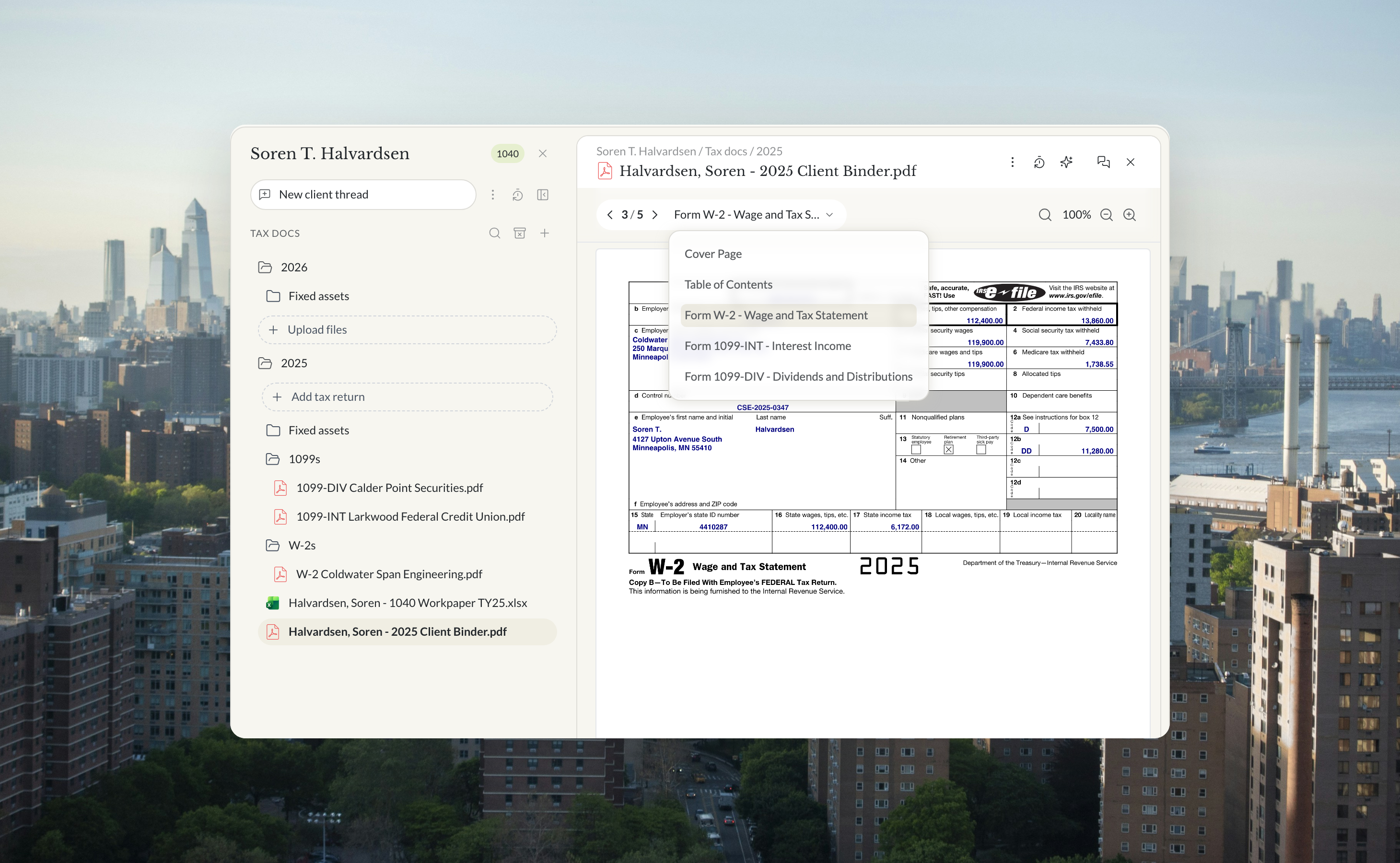

How AI Tax Orchestration Works in Instead

.png)



.png)