
Build an advisory renewal process before the summer slowdown

An advisory renewal process should start before summer drift turns good clients into quiet churn. Many firms still handle renewals casually. Someone remembers to check in; a meeting may or may not get booked; and the client decides whether to continue without ever seeing a clean summary of the value delivered. With a stronger advisory renewal process, the CPA firm's 2026 model turns renewal into an operating event with timing, ownership, and evidence. That structure protects recurring tax advisory services from slipping in momentum.
That matters because advisory clients rarely leave with a dramatic "no." More often, they delay. The review meeting never happens. The work already completed never gets summarized clearly. By Q3, the relationship feels vague rather than active.
A better renewal process for CPA advisory retainers grounds the conversation in the work already delivered and the decisions that still matter this year. IRS Publication 590-A can anchor renewal conversations where the retainer included IRA contribution planning. IRS Publication 575 is relevant when pension and retirement income decisions were part of the advisory scope. IRS Publication 926 applies when household employer situations or domestic staffing arrangements were addressed during the engagement. The point of renewal is not to restate every technical detail. It is to show visible value and define the next scope.
Why summer is when advisory retention gets tested
Summer feels quieter than filing season, but quiet creates risk. If the relationship is not actively managed, clients may begin to wonder whether they are still getting something meaningful for the fee.
That does not mean the advisory work failed. Often, it means the firm failed to make the value visible. Advisory work frequently prevents problems, improves decisions, and keeps deadlines from becoming emergencies. If those wins are not summarized before summer drift begins, the client may forget why the relationship matters.
That is why a summer advisory renewal workflow should begin while the prior work remains tangible and the next planning window can still be explained clearly. Waiting until late summer usually makes the conversation harder because the client has already gone quiet, and the remaining year feels shorter.
This is especially true for business-owner clients whose advisory value may include cleaner S Corporation compensation, reviewed Child & dependent tax credits for qualifying family situations, or late entity structuring through Late C Corporation elections. If the firm does not make those outcomes visible, the retainer can start to feel abstract. Firms that anchor renewal conversations in implemented tax advisory services see stronger continuity into Q3.
Who needs an advisory renewal process
This system is best for firms that already sell recurring advisory services, seasonal planning packages, or retainer-style support and want to retain tax advisory clients in Q3 without relying on partners' memory.
It is a strong fit when:
- Renewal timing varies widely across partners or managers
- Clients tend to drift into silence after the busy season
- The firm struggles to summarize advisory value in plain language
- Some clients should renew at a different tier, not simply repeat the same package
It is less relevant for firms that only sell one-time projects. But once the practice has recurring planning revenue, renewal deserves its own system. Firms serving Individuals alongside business entities often need distinct renewal paths for each segment. A clear renewal system also protects capacity for higher-value tax advisory services work.
How to start every renewal with a client value review
The renewal conversation should begin with evidence, not with pricing or contract language. Clients renew when they can see what changed because they were in the relationship.
A simple value review is often enough. Summarize what the firm completed, what decisions were made, what risk was reduced, and what issues remain for the rest of the year. Keep it concrete and client-specific.
Useful value points may include:
- IRA contribution strategies reviewed under IRS Publication 590-A
- Pension and annuity income decisions are addressed using IRS Publication 575
- Owner compensation or distribution patterns are reviewed for S Corporations
- Child & dependent tax credits reviewed and applied for qualifying clients
- Late entity structuring advanced through Late C Corporation elections
This is what makes the renewal process for CPA advisory retainers feel earned. The firm is not asking the client to keep paying out of habit. It is showing what was done and why another cycle of support matters. That is how firms keep tax advisory services tied to visible outcomes.
When should you open the advisory renewal window
Timing is one of the strongest renewal levers. If the firm waits until late summer, the relationship may feel inactive, and the next planning cycle may feel too far away to justify another commitment.
A stronger approach is to open renewals in late spring or early summer, while the prior work is still recent and the next planning tasks are still visible. That helps the client make a cleaner decision and helps the firm forecast capacity and recurring revenue earlier.
A worked example shows why. Suppose a firm has 40 advisory retainers averaging $7,200 annually. If 10 relationships drift because the renewal conversation starts too late, that puts $72,000 of recurring revenue at risk. If earlier outreach saves even half of those accounts, the process pays for itself quickly.
This is what separates a real advisory renewal process from a casual check-in habit. The timing is deliberate, not accidental. Firms that tie renewal timing to planning cycles for Individuals and business-entity clients tend to protect more recurring revenue and stronger tax advisory services margins.
What should a standard advisory renewal agenda include
Renewals get easier when the meeting follows a repeatable structure. A short agenda can do most of the work:
- Review what was completed
- Confirm what changed in the business
- Identify what still matters in Q3 and Q4
- Recommend the next scope
- Confirm cadence, fee, and decision timeline
This makes renewal feel like continuity rather than a separate sales motion. The client sees the next scope as the next chapter of the same planning relationship.
A good system also gives room to tier the recommendations. Not every client should renew into the same package. Some deserve fuller support. Some should move into a narrower seasonal scope. Some are better served by stepping back to compliance-only work.
That tiering is healthy. It protects the margin and keeps the firm from clinging to weak-fit retainers. A good summer advisory renewal workflow should improve portfolio quality, not just raw renewal percentage. It should also protect the tax advisory services the firm can deliver profitably, particularly for business-owner clients whose retainers extend to implementation work across S Corporations and related-entity planning.
How to assign ownership and measure renewal quality
Renewal systems fail when everyone assumes someone else will handle the conversation. Every client should have a named renewal owner.
That owner should be responsible for:
- Drafting the value summary
- Booking the review meeting
- Recommending the next scope
- Following up until a decision is reached
Once ownership is clear, track renewal quality with more detail than signed or unsigned. Useful metrics include:
- Renewal timing
- Downgrade rate
- Upgrade rate
- Days to decision
- Value themes that appear in successful renewals
Those measures show where the process is actually working. Perhaps clients with a clear outcome around Child & dependent tax credits or Late C Corporation elections renew more easily because the value is concrete. Perhaps broad retainers with vague deliverables are harder to renew because the story is harder to tell.
Firms should also script the recommendation itself. The advisor should be able to explain, plainly, what changed during the last cycle, what still matters this year, and why the recommended next scope fits the client's current situation. When that explanation is clear, pricing conversations for ongoing tax advisory services are easier.
How to build renewal support before the season starts
The best renewal conversations are easier because the firm prepares throughout the year, not because someone gives a perfect speech at the end.
A few operating habits help:
- Log wins and decisions throughout the engagement
- Keep a simple status view of upcoming renewals
- Maintain templates for value reviews by client type
- Define the non-renewal or downshift path in advance
That last point matters. Some clients really are better served by compliance-only work or a narrower project. If the firm avoids that conversation because it feels awkward, weak-fit retainers linger, and the portfolio gets noisier.
It can also help to maintain simple renewal narratives for different client profiles. A growing owner may need language centered on planning continuity and cash decisions. A seasonal client may need a narrower support story. A client moving down in scope may need language that makes the change feel intentional rather than like a quiet downgrade. The broader lesson is straightforward: renewal should be managed with the same rigor the firm brings to sales and delivery. That is especially true for tax advisory services that depend on continuity across Individuals and business entities alike.
What warning signs predict advisory churn before it happens
Most advisory churn is visible before the client officially leaves. Meetings get rescheduled twice. Documents stop arriving. Email replies get shorter. The client starts asking whether they can "pause for a bit" without engaging the actual scope question. A renewal system should flag those signs early.
That does not mean every at-risk client should be pushed harder. It means the firm should know when to act. Some clients need a clearer summary of value. Some need a narrower package. Some need the partner to step back into the relationship for one direct conversation. If the team sees the warning signs early enough, retention work becomes a management task instead of a post-mortem.
It is also helpful to classify churn honestly. Loss due to the business changing is different from loss due to the firm failing to schedule the review meeting. Those categories point to different fixes. A renewal dashboard should make that distinction visible so that leadership can distinguish market reality from preventable process failures. So tax advisory services leaders can allocate attention where it will actually move retention. Firms serving complex S Corporation clients especially benefit from this clarity.
How to make the advisory renewal easier to say yes to
Renewal conversations often stall because the recommendation is too vague. "Let's keep working together" is weaker than a direct explanation of what the next cycle includes and why that scope fits the client now.
A stronger renewal ask usually includes three things: what the client has already gained, what unresolved decisions still matter, and what cadence or support level makes sense next. When those points are clear, the client is responding to a real proposal instead of to a fuzzy sense of whether advisory still feels worth it. That clarity makes tax advisory services easier to retain.
This is also where optionality can help. Some firms improve retention simply by offering a clear step-down package for clients who no longer need the full scope but still benefit from periodic planning, whether that planning touches a Sell your home transaction or simpler seasonal questions for Individuals. That is often better than losing the relationship entirely.
Why a shared renewal calendar protects advisory revenue
Many renewal systems fail because the dates are hidden inside individual calendars and memory. A better approach is one shared renewal calendar or dashboard that shows which clients are entering the review window, who owns the conversation, and what materials still need to be prepared.
That visibility changes behavior. Partners, stop being surprised by upcoming renewals. Managers can see where value summaries are late. Client success or operations staff can nudge the process before the window slips. A calendar may sound simple, but in many firms it is the difference between intentional retention and quiet drift.
The calendar should also show the target decision date, not just the meeting date. That forces the team to think about follow-up time and keeps late-June conversations from becoming unresolved August threads.
A strong calendar can also group clients by renewal type: some need full-scope renewals, some need step-down packages, and some need a candid conversation about whether recurring advisory still fits. That visibility is also useful for forecasting recurring revenue. Firms can estimate renewal value at risk, likely upgrades, and clients that need partner attention before the meeting even happens. Tying that forecast to capacity planning across S Corporations, Individuals, and other tax advisory services segments keeps the team on the right renewals first.
How Instead Pro supports your advisory renewal process
Renewals become fragile when prior wins, pending decisions, and scope recommendations are scattered across notes and inboxes. Instead's intelligent system helps firms keep that context organized so a renewal process for CPA advisory retainers can run with clearer timing, ownership, and follow-through. That is particularly useful before summer, when firms need one view of renewal timing, unresolved client questions, and the exact basis for the next recommendation. Firms using the Instead Pro partner program can review which tax advisory services are worth renewing, narrowing, or expanding before momentum slips.
Frequently asked questions
Q: What is an advisory renewal process for a CPA firm?
A: It is a structured system for reviewing value delivered, identifying upcoming planning needs, recommending the next scope, and closing renewals before the relationship drifts.
Q: Why renew advisory clients before the summer slowdown?
A: Summer is when clients often go quiet, and the value of the retainer becomes less visible. Renewing earlier helps preserve momentum and reduce passive churn.
Q: What should a summer advisory renewal workflow include?
A: It should include a value review, a standard renewal agenda, tiered scope recommendations, clear ownership, and tracked follow-up through the final decision.
Q: How do firms retain tax advisory clients into Q3?
A: They make prior value visible, connect renewal to the next decisions that still matter in Q3 and Q4, and start the process before the relationship feels stale.
Q: What is the biggest mistake with advisory renewals?
A: Treating renewal like a casual reminder instead of an operating process. Without timing, ownership, and evidence of value, good clients quietly drift away.
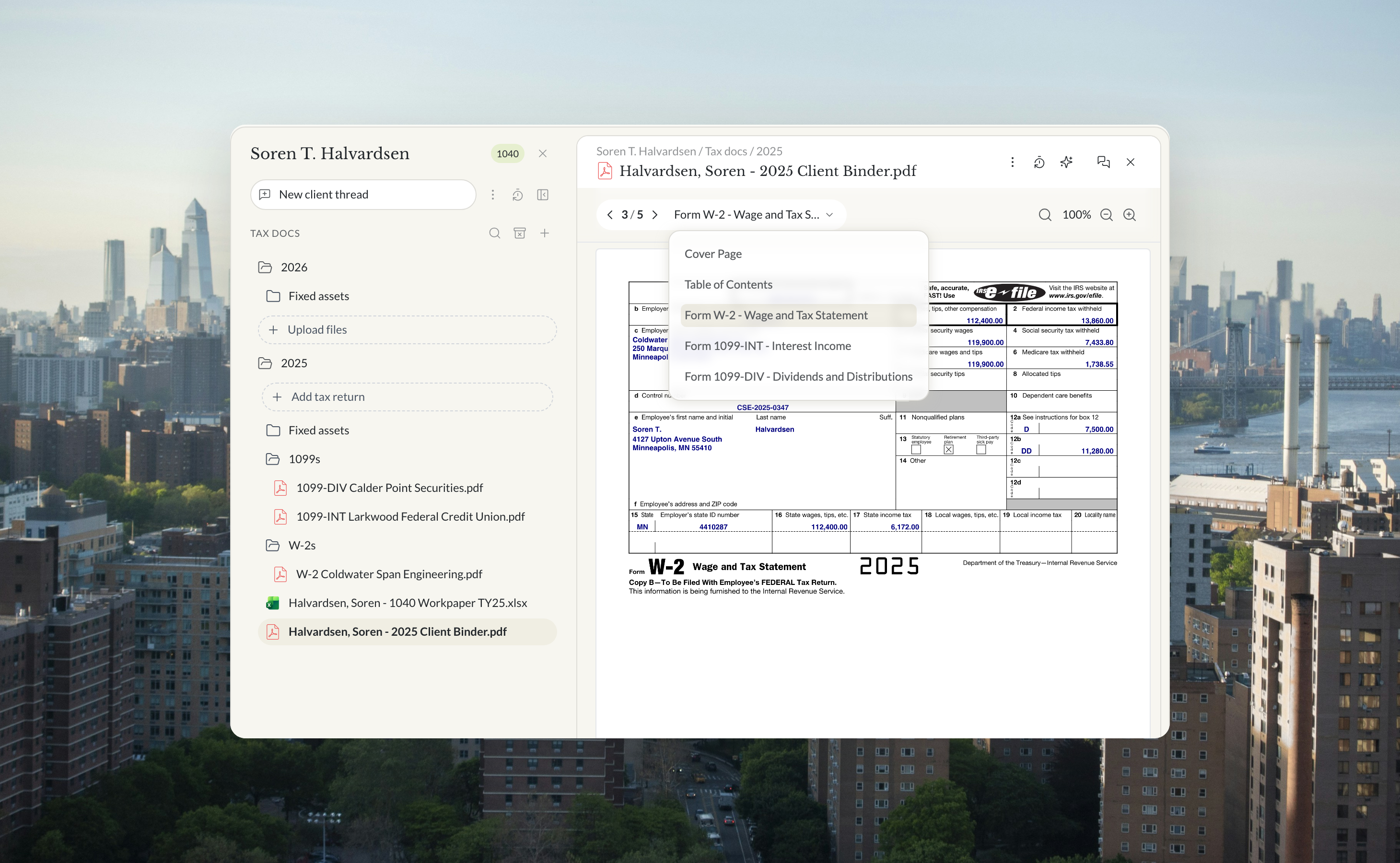

How AI Tax Orchestration Works in Instead

.png)

What to Ask an AI Tax Vendor Before Tax Season



.png)