
Build a Form 1116 carryover file for foreign tax credits

Foreign taxes paid in a single year often exceed the amount you can actually claim against your U.S. tax liability, leaving valuable credits stranded unless you track them correctly. The foreign tax credit carryover lets you preserve those unused amounts and apply them in other years, but only if you maintain accurate, year-by-year records that the IRS will accept on examination.
Building a dedicated Form 1116 carryover file turns a confusing pile of foreign income statements into an organized system that protects every dollar of credit you have earned. This is especially important for U.S. citizens working abroad, investors holding international funds, and business owners with cross-border income who routinely pay more foreign tax than they can use in one year.
A well-maintained carryover file also coordinates cleanly with the rest of your planning, so the credits you carry forward work alongside other Individual tax strategies rather than getting lost in the shuffle. The official Form 1116 and its instructions are the foundation, and a clean file built around them keeps you compliant while maximizing the value of taxes you have already paid overseas.
Understanding the foreign tax credit carryover
The foreign tax credit prevents the same income from being taxed twice, once by a foreign government and again by the United States. When the foreign taxes you paid in a year are larger than the credit limit calculated on Form 1116, the excess does not disappear. Instead, it becomes a carryover that can be applied to other tax years within specific time limits.
The credit limit is the portion of your U.S. tax that is attributable to your foreign-source income. If your foreign taxes exceed that limit, the unused amount is the figure you must capture and carry forward. The IRS explains the full mechanics in Publication 514, which is the authoritative reference for individuals claiming the credit.
Several common situations create carryovers worth tracking:
- High foreign tax rates that exceed the equivalent U.S. rate on the same income
- Timing differences between when foreign income is taxed abroad and reported here
- Years with low U.S. tax liability limit how much credit you can use
- Large one-time foreign tax payments tied to investment sales or distributions
Because these amounts often build quietly over multiple years, a carryover file gives you a single place to see what you have accumulated. That visibility also helps when you decide how aggressively to use other deductions in a given year.
Foreign tax credit carryforward and carryback rules
The foreign tax credit follows a specific ordering rule that you must apply consistently in your file. First, the unused credit is carried back one year. Next, any remaining amount is carried forward for up to 10 years. One important exception applies, since credits tied to certain global intangible income under section 951A cannot be carried back or forward at all. Understanding this sequence is essential because applying credits out of order can trigger errors and missed value.
When you carry an unused credit back to the prior year, you generally amend that return to claim the additional credit. If the prior year has already used its full available limit, the credit moves forward instead. The ten-year carry-forward window is generous, but credits do expire at the end of that period, so older amounts should always be applied before newer ones.
A reliable carryover file tracks each year's activity in a clear progression:
- Record the foreign taxes paid and the Form 1116 credit limit for the year
- Calculate the unused credit, which is the excess of taxes paid over the limit
- Apply a one-year carryback to the immediately preceding year where possible
- Carry any remaining balance forward, oldest amounts first, for up to ten years
- Update the running balance after each year's return is filed
Keeping this sequence visible prevents the most common carryover mistake, which is letting a credit lapse simply because no one tracked its expiration. For citizens living overseas, Publication 54 offers additional context on how foreign income and credits interact with the rest of an expatriate return, and pairing it with a structured file keeps long-term balances accurate.
Building your Form 1116 carryover file
A practical carryover file is built around a single continuous record per income category that follows the credit through every relevant year. The goal is to recreate, on demand, exactly how each unused credit arose and where it was eventually applied. This level of detail is what allows you to defend the credit if the IRS ever questions it.
Start by gathering the source documents that prove both the income and the tax. These typically include foreign payslips, year-end statements, brokerage 1099 forms reporting foreign tax paid, and any foreign tax returns or receipts. Storing these in a single, organized location keeps the supporting evidence and the calculations together.
Your file should contain a few core components for every year:
- A copy of the filed Form 1116 and any attached statements
- The credit limitation calculation shows foreign-source income and U.S. tax
- A carryover schedule listing the year of origin and the running balance
- Documentation of any carryback amendments and the years they affected
Business owners with foreign-source income flowing through an entity should keep parallel records at the entity level. Owners of an S Corporation or a Partnership receive their foreign tax information on Schedule K-3, and those amounts must reconcile with the individual carryover file before any credit is claimed.
Tracking foreign tax credit carryovers by category
Form 1116 requires that foreign income and taxes be separated into categories, and that carryovers can only offset income within the same category. The most common categories for individuals are passive income, which includes most dividends and interest, and general income, which includes wages and active business earnings. Mixing categories is one of the fastest ways to create an unusable credit.
Your carryover file should maintain a separate running schedule for each category rather than a single combined total. This prevents a passive-category credit from being mistakenly applied against general-category income, which the rules do not allow. The IRS reference in Publication 17 provides a useful overview of how different types of income are characterized for individual returns.
When you organize the file by category, a few practices keep the schedules clean:
- Label every entry with both the year of origin and the income category
- Reconcile each category against the matching Form 1116 line each year
- Carry the oldest credit within a category forward before any newer credit
- Note when the income changes category status due to a foreign tax law change
Investors who also use Tax loss harvesting should pay particular attention here, because realized losses can shift the amount of foreign-source passive income in a year and therefore change how much credit the limitation allows. Coordinating both records prevents one strategy from quietly eroding the other's benefit.
Coordinating carryovers with tax planning
A foreign tax credit carryover is most valuable when it is planned around the rest of your return rather than treated in isolation. Because the credit limit depends on the ratio of foreign income to total taxable income, decisions you make elsewhere directly affect how much credit you can use in any given year.
Retirement contributions are a clear example. Funding a Traditional 401k plan lowers your overall taxable income and your U.S. tax, which can reduce the credit limit and push more of the current-year credit into carryover status. Choosing a Roth 401k instead changes that calculation, so the carryover file gives you the data needed to compare both paths intelligently.
Other planning levers interact with the carryover as well:
- A Health savings account reduces adjusted gross income and can shift the credit limitation
- Business Depreciation and amortization timing affects active income that may carry foreign tax
- State filing obligations vary, and the relevant State Tax Deadlines should be tracked alongside federal carryovers
Reviewing these connections each year, ideally before you file, lets you decide whether to use a carryover now or preserve it for a future year when your limit may be higher. A current carryover file makes that decision a matter of reading your own records rather than reconstructing years of foreign tax history under deadline pressure.
Avoiding common Form 1116 carryover errors
Even taxpayers who correctly claim the credit often stumble over the carryover mechanics, and most errors trace back to incomplete records. The single most damaging mistake is failing to track expiration dates, which can cause a credit to lapse after 10 years even though it was fully valid. A dated carryover schedule eliminates this risk.
Another frequent problem is inconsistent categorization across years, in which the same income is treated as passive in one year and as general in another. This breaks the matching requirement and can disqualify a carryover. Defining each category once and applying it consistently throughout the file protects against this.
Watch for these additional pitfalls when maintaining your records:
- Claiming a carryforward before exhausting the required one-year carryback
- Forgetting to amend the carryback year when additional credit is available
- Combining categories into a single total that hides unusable amounts
- Losing the source documents that substantiate the original foreign tax
When questions arise, the layered guidance across Publication 514 and the Form 1116 instructions resolves most uncertainty.
Build your foreign tax credit file with confidence
A Form 1116 carryover file is the difference between credits that quietly expire and credits that reduce your tax for years to come. By organizing your records by category, tracking each year's balance, and coordinating carryovers with the rest of your plan, you turn foreign taxes already paid into a durable, defensible asset.
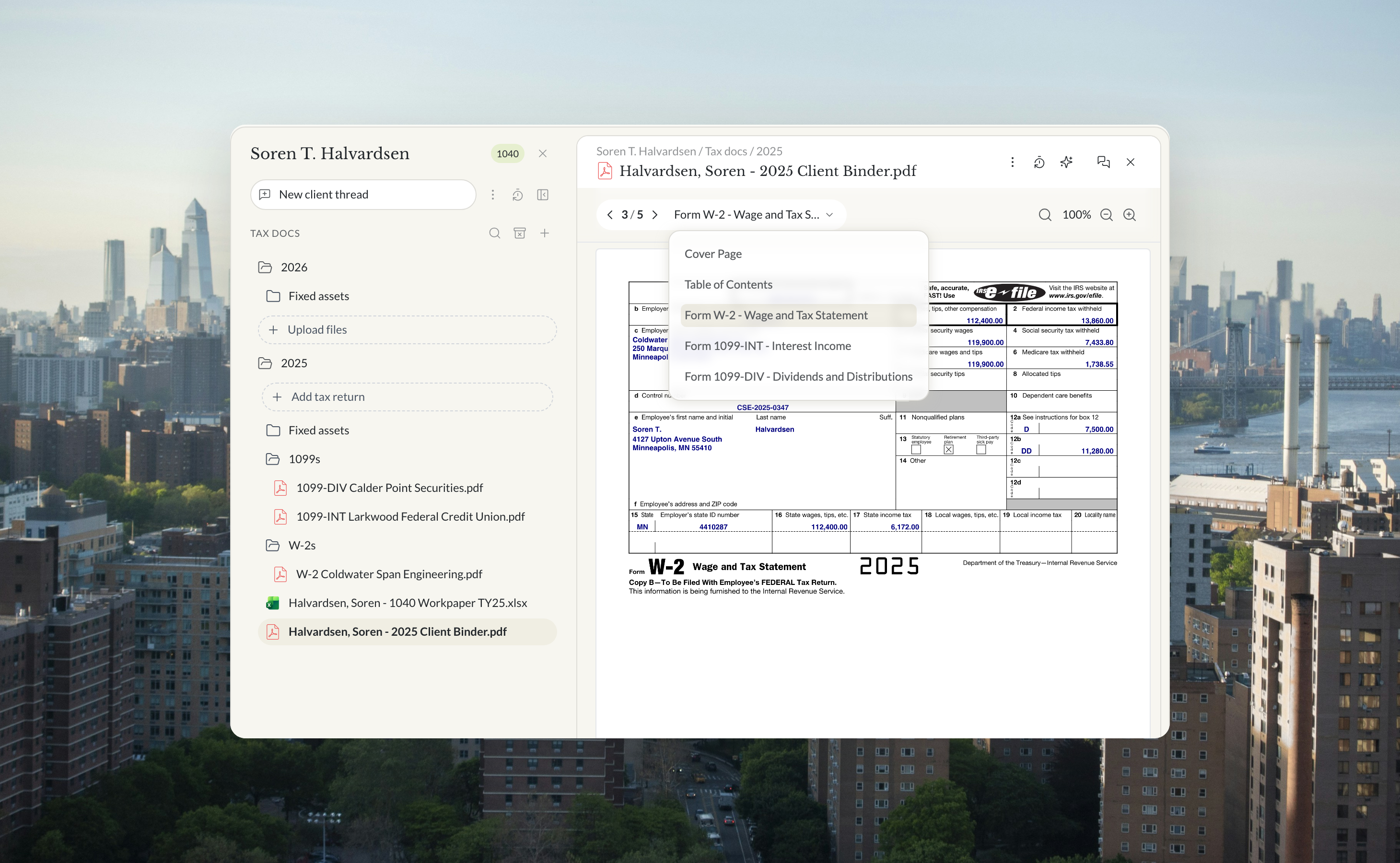
Joining Instead gives you a single home for that entire process. The Instead platform connects your foreign tax records with your filing data, keeping your tax workpapers, tax memos, and tax documents in one place so carryover balances and source materials stay together year after year.
Instead's intelligent system supports the work behind every credit, from tax research on foreign income rules to the action items that keep your file current, while aligning your tax savings and tax reporting as your situation changes.
Start protecting every dollar of foreign tax you have paid by building your carryover file on a platform designed for it. Explore the flexible pricing plans and put your foreign tax credits to work.
Frequently asked questions
Q: How long can I carry forward unused foreign tax credits?
A: Unused foreign tax credits are first carried back one year and then carried forward for up to ten years. Credits that remain unused at the end of the ten-year window expire, which is why a dated carryover schedule that applies the oldest amounts first is essential.
Q: Do I have to carry the credit back before carrying it forward?
A: Yes. The ordering rule requires you to apply any unused credit to the immediately preceding year first. Only the amount that cannot be used in the carryback year moves forward, and applying a carryforward before completing the required carryback is a common error.
Q: Can a passive-category credit offset general-category income?
A: No. Foreign tax credit carryovers can only offset income within the same category. Passive-category credits apply against passive income and general-category credits apply against general income, so your file should keep a separate running schedule for each category.
Q: What documents should my carryover file include?
A: Keep a copy of each filed Form 1116, the credit limitation calculation, a carryover schedule listing the year of origin and running balance, and the source documents proving foreign tax paid, such as brokerage statements and foreign tax receipts.
Q: How do retirement contributions affect my carryover?
A: Contributions that lower taxable income, such as a Traditional 401k, can reduce your credit limit and push more current-year credit into carryover status. Reviewing this interaction before filing helps you decide whether to use a credit now or preserve it for a higher-limit year.
Q: Where do business owners find their foreign tax information?
A: Owners of pass-through entities receive their foreign tax details on Schedule K-3, which accompanies the Schedule K-1. Those amounts must reconcile with the individual carryover file before any credit is claimed, and parallel records at the entity level help keep the figures consistent.
Q: What is the best way to prevent a credit from expiring?
A: Maintain a single carryover schedule that lists each credit by its year of origin and a running balance, and always apply the oldest credit within a category first. This makes expiration dates visible and ensures older credits are used before they lapse.

Year-End Tax Planning 2026: Checklist of Strategies by Dec 31

How AI Tax Orchestration Works in Instead

.png)



.png)